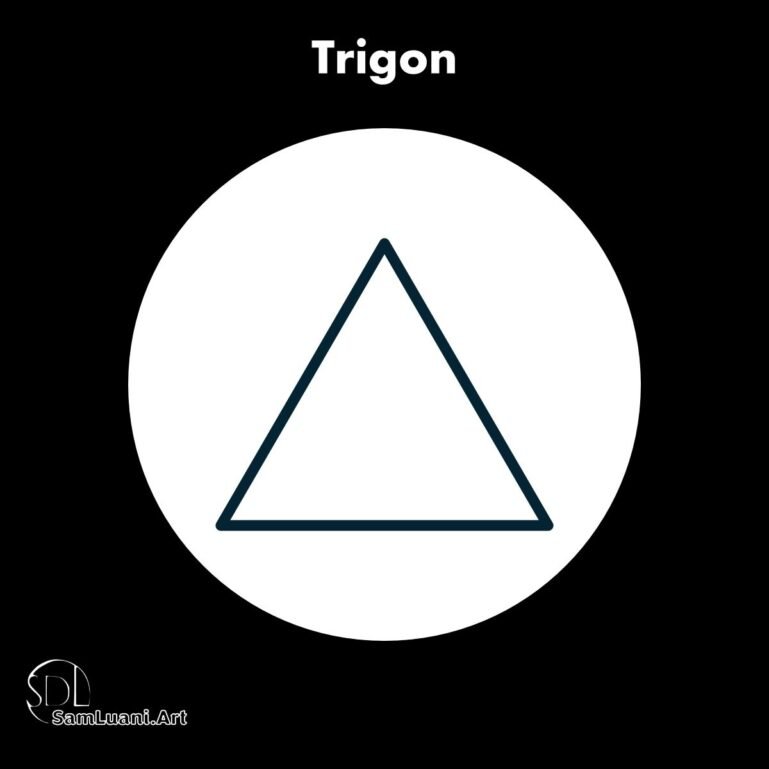
The triangle, also known as the trigon, is one of the most fundamental geometric symbols. Its simplicity lies in the basic method of using straight lines to define an area and create a recognizable figure. As a polygon with three edges and three vertices, the triangle is renowned for its physical stability, making it a staple in construction, engineering, design, and, in the context of InnerSpace, even magic.
Symbolic Meanings and Archetypal Significance
A triangle positioned on its base conveys stability, trust, and a strong foundation. In contrast, when inverted or placed on its side, it suggests tension, action, growth, and dynamic movement, much like the “Play” icon. This shape not only represents balance but also embodies the precise tension that holds opposing forces together—stability does not necessarily mean peace, but rather the harmonious maintenance of disparity.
Triangles have deep roots in the human psyche as archetypal figures, often associated with triads or groups of three, which give rise to more complex concepts. The pyramid serves as a physical manifestation of the triangle as an archetype.
Historical and Spiritual Associations
Throughout history, triangles have been used for hierarchical and spiritual purposes. Their orientation can alter their symbolic meaning. For example, triangles are linked to trinities, such as the Christian Trinity (Father, Son, Holy Spirit) and the Egyptian triad (Horus, Isis, Osiris). They also symbolize the synthesis of elements: spirit, fire, water, and earth.
During the Renaissance, artists used triangular compositions to arrange figures, establishing visual hierarchy and structural balance. In pre-Christian times, the philosopher Xenocrates (339–314 BC) deemed the equilateral triangle “divine,” the isosceles “demonic,” and the scalene “human” or imperfect.
In the Pythagorean system, the Greek letter delta (Δ), shaped as a triangle, symbolizes cosmic birth. Pythagoras was particularly fascinated by the harmony of numbers within the right triangle. He observed that while the side lengths themselves may not be obviously related, the sum of the areas of squares constructed on the two shorter sides equals the area of the square constructed on the longest side. This remarkable discovery suggested to Pythagoras and his followers that the universe’s mysteries could ultimately be revealed through numerical relationships.
Interpretations Based on Orientation
- Upward-Pointing Triangles: Represent strength, foundation, and spiritual ascent. The apex points toward higher goals, spirit, or divine unity, which is exemplified in pyramids that symbolize self-actualization. In symbolic terms, an upward-pointing triangle can correspond to fire, masculinity, love, and wisdom.
- Downward-Pointing Triangles: Suggest descent or a connection to the material world, often associated with water, femininity, and maternal qualities.
In the magical framework of InnerSpace, the triangle’s orientation is given a functional symbolism for the classical elements, differing from traditional alchemy:
- A triangle with the apex pointing upward symbolizes earth and earth elementals.
- A triangle with the apex pointing downward symbolizes air and air elementals.
- A triangle with the apex to the right represents fire and fire elementals.
- A triangle with the apex to the left represents water.
Use in Art, Design, and Technology
Triangles play an essential role in art and serve as fundamental visual modules in computer graphics. Their geometric simplicity and computational efficiency make them the ideal polygon for rendering; triangles always remain planar, regardless of vertex placement. This property allows graphics hardware to quickly determine how light interacts with their surfaces.
Any polygon can be divided into triangles by drawing diagonals from one vertex to the others, a process known as triangulation. As a result, all geometric frameworks used in art are, at their core, conceptually triangular.
Triangular arrangements in visual design guide the viewer’s eye throughout the entire composition, ensuring that all elements receive attention. Converging lines in perspective naturally create triangular forms, adding realism and depth to scenes. Organizing text, images, or shapes into triangular formations fosters visual flow, purpose, and hierarchy.
In photography and visual motifs, triangles can be formed through natural elements such as roads, reflections, or mountain peaks. These arrangements introduce both balance and drama into the composition.
Psychological and Artistic Implications
A symmetrical triangle with the apex downward and the base upward often evokes, in the unconscious mind, the impression of a rudimentary face—two eyes at the upper corners and a mouth at the apex. This perception makes the triangle a meaningful module in portraiture. In InnerSpace, the triangle is considered a semencular module—a visual component that exhibits semenculus properties.
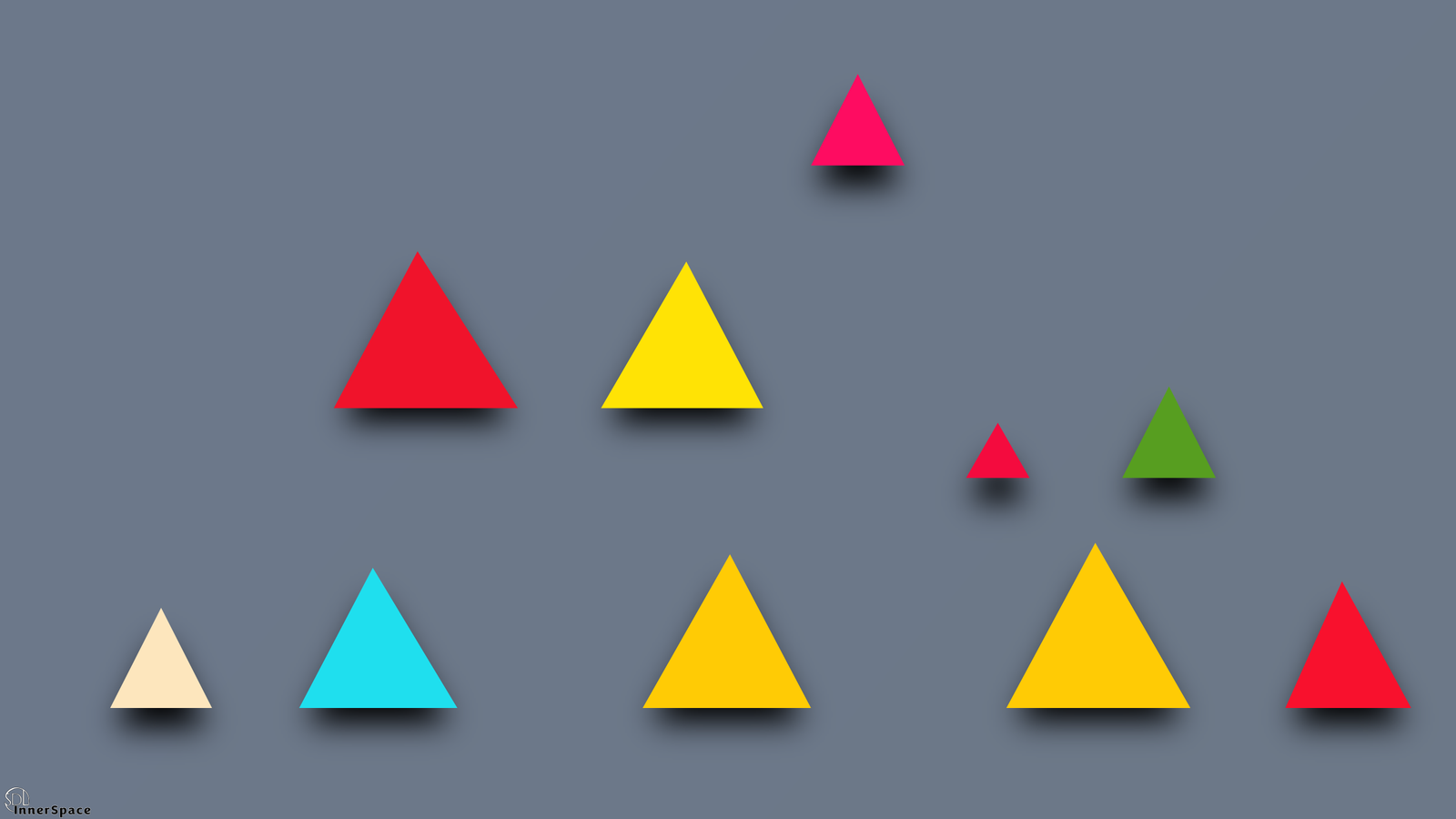
SDLISP100004 | Gnomes | Story
SDLISP100004 | Gnomes | A minimalistic work with triangular shapes by Sam Diellor Luani
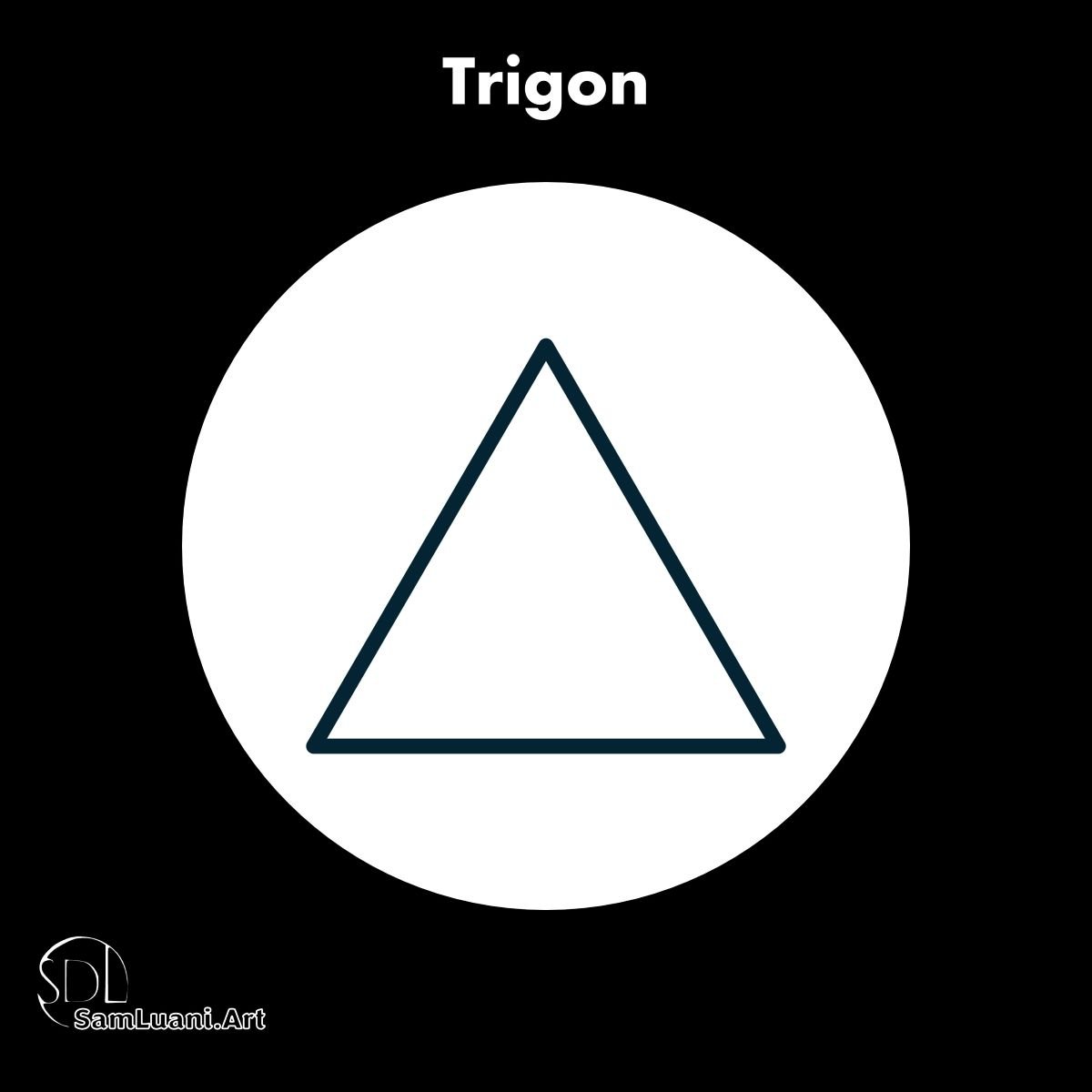
Triangle
The triangle, also known as the trigon, is one of the most fundamental geometric symbols. In the context of InnerSpace, even magic.