View on DeviantArt | Product Page
The 90-Degree Phase Transition
The Cluster of Distress & The Organic MouthEye
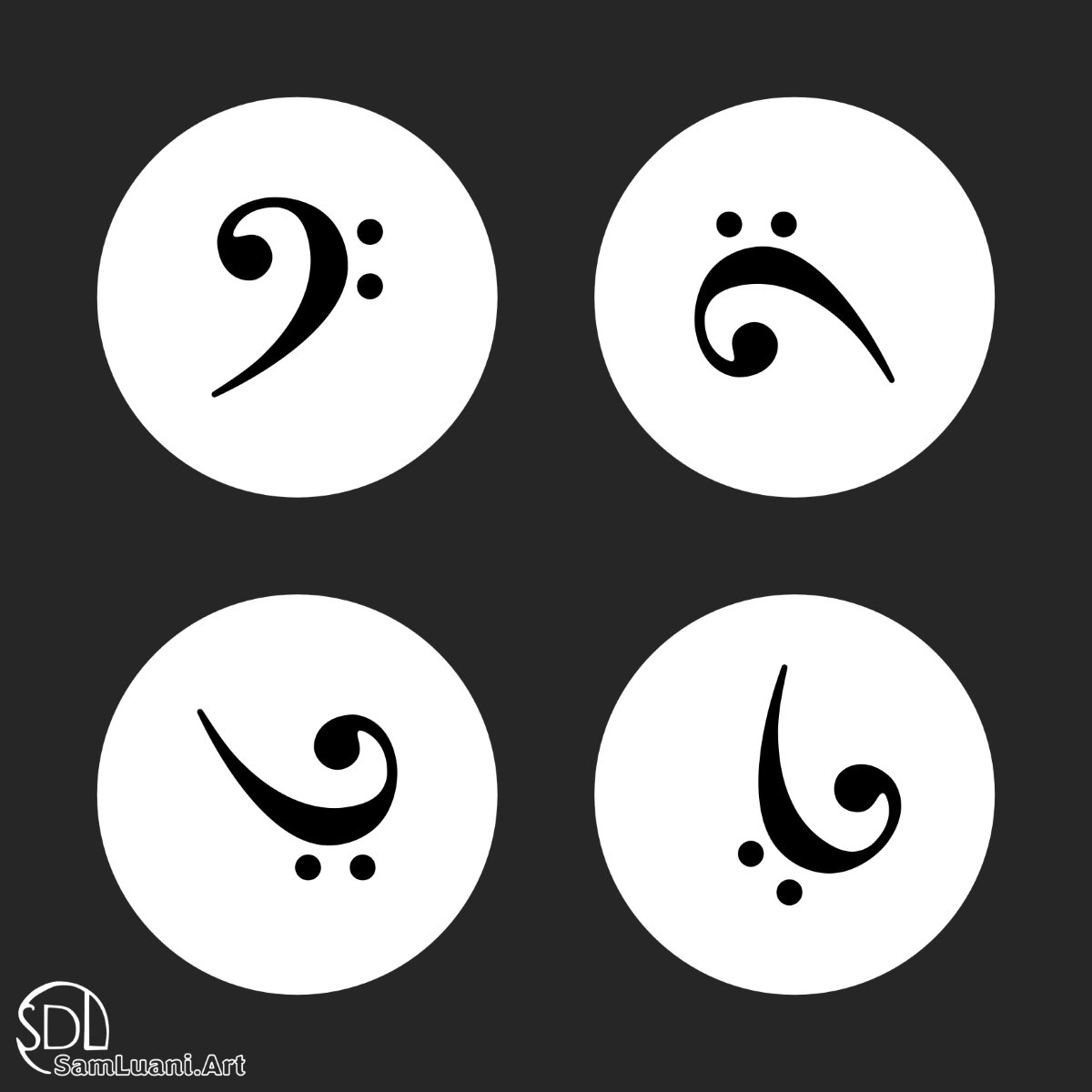
If the first act of this study was The Severing (Plate 01), the second act is The Rotation. We have established the Bass Clef as a living “comma” of biological potential. Now, we test its reflexes.
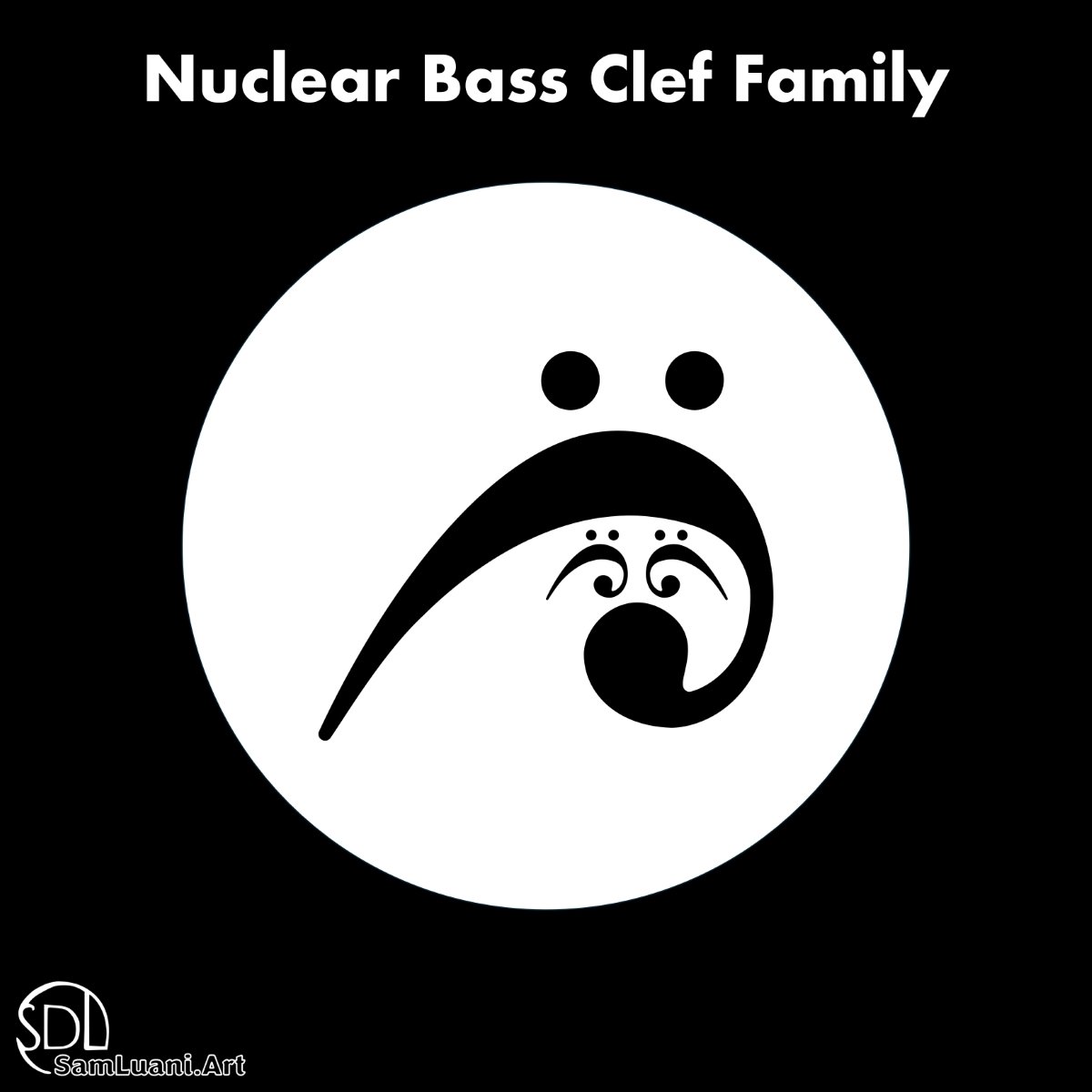
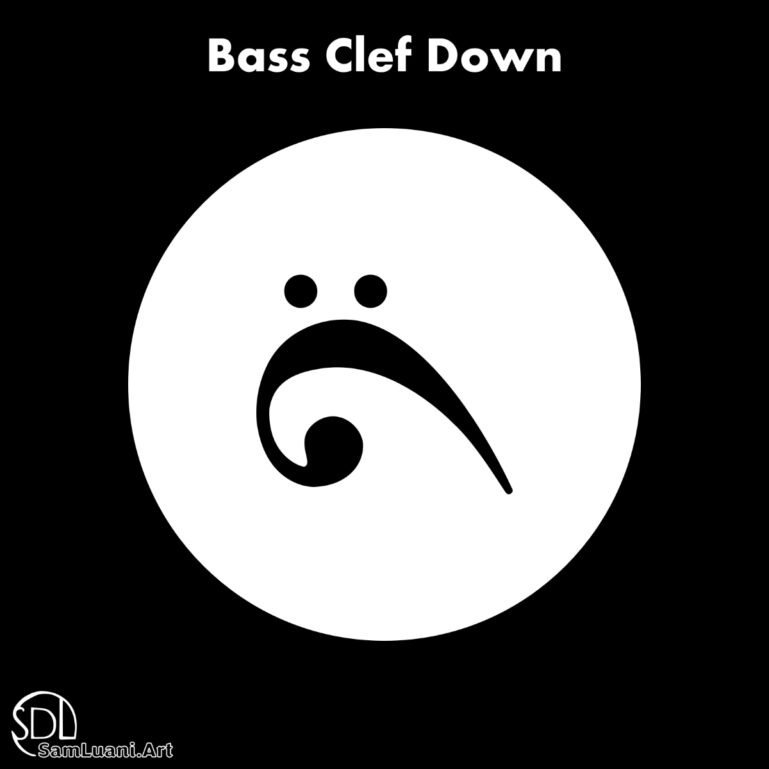
By performing a simple geometric rotation—turning the glyph 90 degrees to the left—the transformation shifts from the biological to the psychological. The “creature” ceases to be a passive observer or a sleeping embryo; it wakes up, and it reacts.
In this specific orientation , the symbol unlocks a cascade of overlapping visual hallucinations. It does not present a single, static image, but a superposition of states—a quantum flickering of anxiety that I designate as The Cluster of Distress.
Dissecting the Visual Event
The rotation forces the viewer’s brain to cycle rapidly through three distinct interpretations, unable to settle on just one:
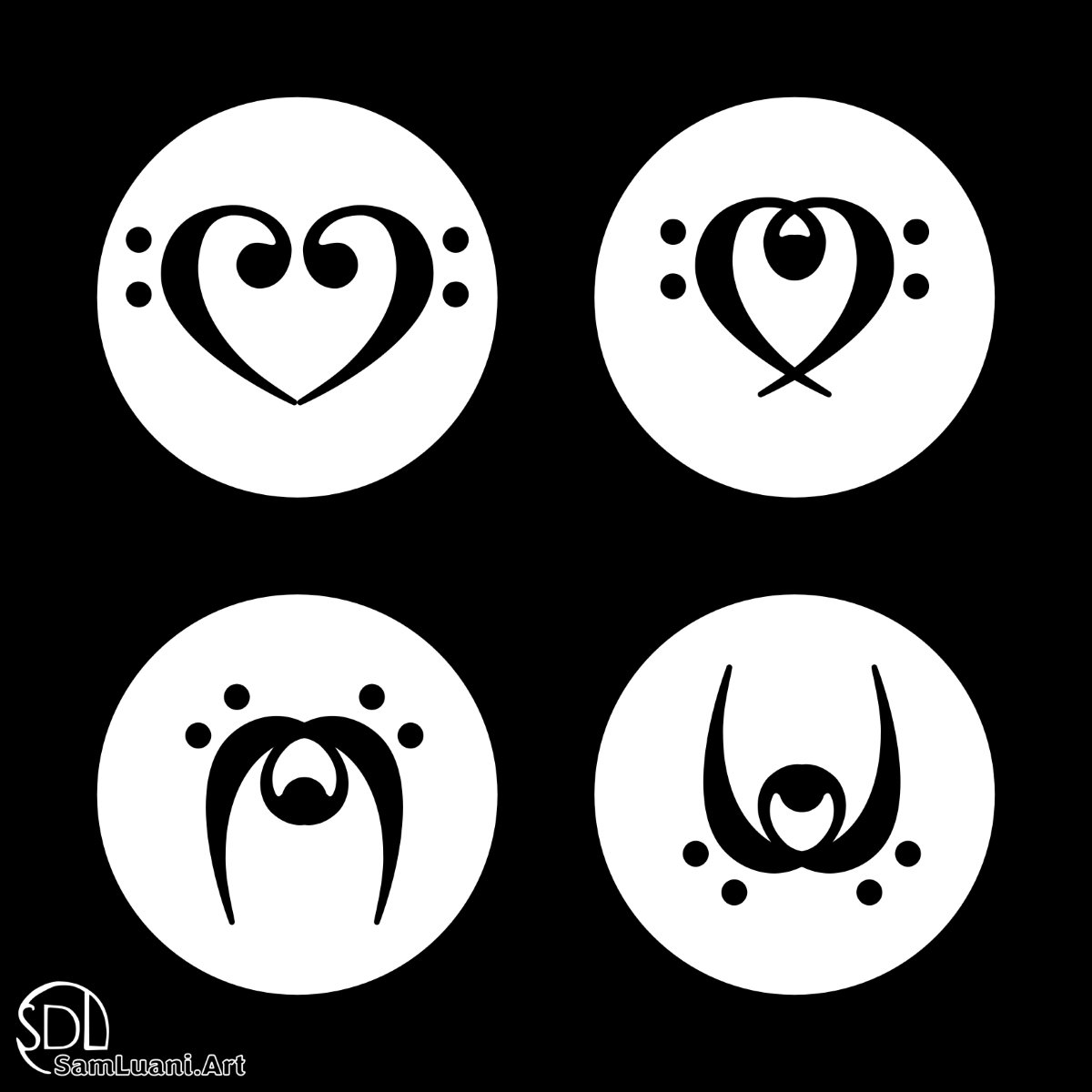
- The Eye: First, the figure resolves into a single, widening eye. The two dots hover above as a furrowed brow, while the heavy comma forms the iris and pupil, staring back at the viewer with intensity.
- The Body: Simultaneously, the scale shifts. The comma becomes an upper torso leaning away in recoil. The dot-like head of the curve transforms into a hand—either clenched in a defensive fist or raised to cover a mouth in a gesture of being stunned.
- The Scream: Finally, the scale shifts again to the grotesque. The comma becomes a gaping, open mouth. The dot-like head is the tongue retracted in a scream. The two dots above serve as flared nostrils or wide, terrified eyes.
Biological Coherence: The MouthEye
What is remarkable here is not that we see a face—humans are hardwired for pareidolia—but the specificity of the hallucination. The bass clef does not project random, unrelated concepts. It does not look like a “nose” one moment and an “airplane” the next.
Instead, it functions as a highly streamlined MouthEye.
Long-time followers of SDL InnerSpace will recognize the “MouthEye” as a recurring search in my work—the pursuit of a symbol that represents the collapse of seeing and speaking. This rotated clef is a naturally occurring MouthEye. Every interpretation converges on a single, coherent cluster of concepts: eyes, nostrils, mouth, tongue, arms, defense. It functions as a solid, conceptual sign for a “person in distress.” The biology is consistent. The logic is watertight.
The Archetype vs. The Emoji
This coherence explains why this figure feels deeper, smoother, and more unsettling than any constructed icon. It acts like a creature from the dream world.
One might ask: if this face is so clear, why has it not become a common “smiley” or emoji? The answer lies in its depth. Smileys are linguistic tools; they are safe, sterilized signifiers of emotion that do not disturb the psyche. The rotated bass clef, however, hits the pre-conceptual receptors. It does not just signify fear; it triggers the visual pattern of it.
It creates waves of emotional resonance in the unconscious mind. It is too visceral, too raw, and too “touching” to serve as elegant decor or a casual text replacement. It is not cute; it is archetypal.
The Magical Weapon
Because this figure bypasses the logical brain and affects the unconscious directly with the disturbance it represents, it possesses the potential of a magical artifact. It is a weaponized glyph.
In this study we treat this figure not as a drawing, but as a stored frequency. Whether hidden in a text or placed subtly in an image, it signals danger. It vibrates with the frequency of the “Stunned,” the “Scared,” and the “Shocked.” It is a symbol that looks back at you with a scream.
Use it with caution.