View on DeviantArt | Product Page
The Inter-Mediatic Allegory of Verse & The Blade of the Rhapsode
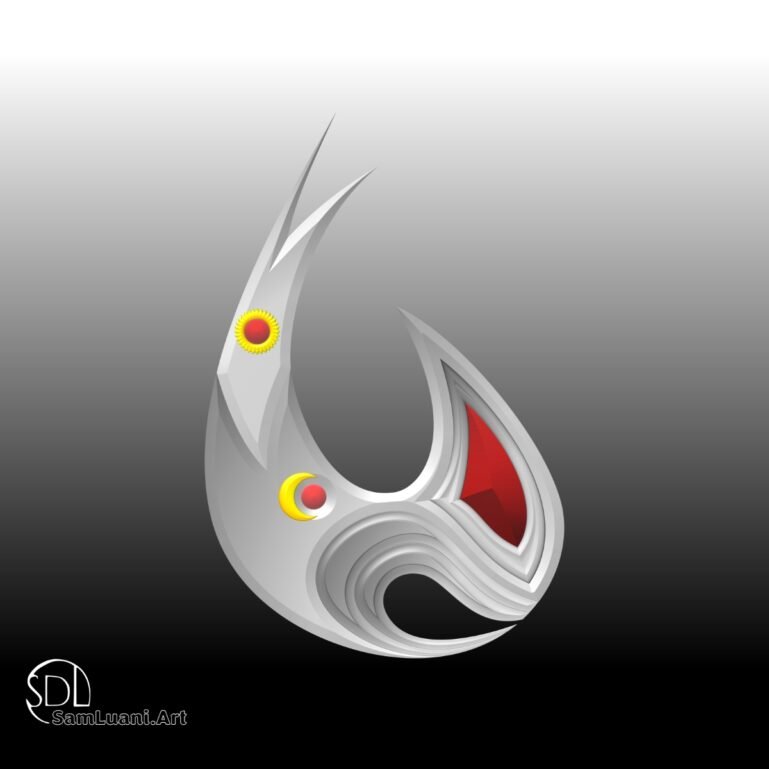
There are images that are depictions, and there are images that are icons. “Our Common Nightingale” belongs to the latter. This is an artwork I am proud of, not merely for its aesthetic finish, but because it serves as a visual keystone for the aesthetic theory on which SDL InnerSpace relies. It is a tribute to the Nightingale as an important symbol of art, poetry, music, magic, and higher aspirations.
But why “Common”? Because this bird does not belong to biology; it belongs to the shared soul of every creator. Whether you are a poet struggling with a stanza or a magician casting a circle, this is the totem of our tribe.
The Allegory of Verse | Deformation as Art
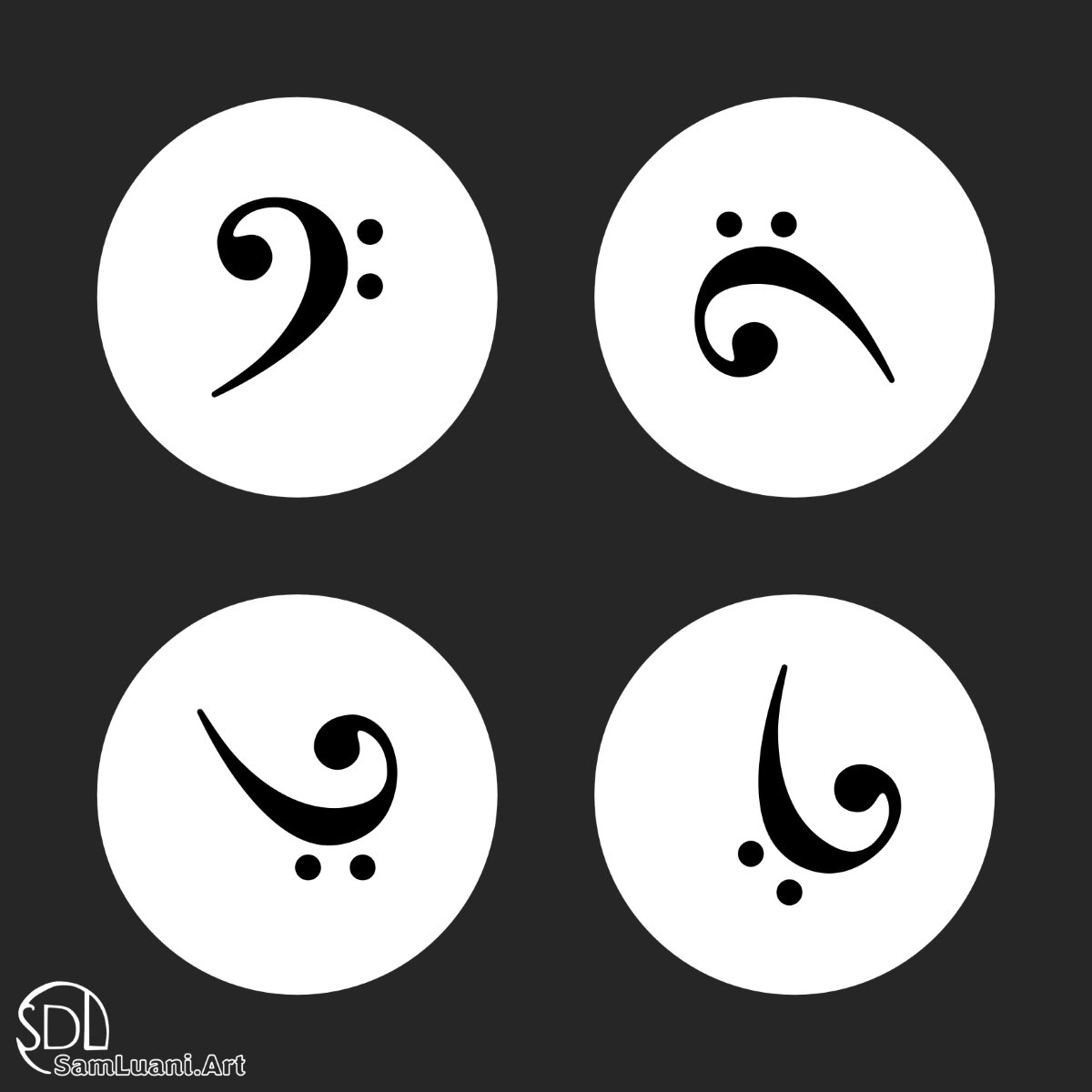
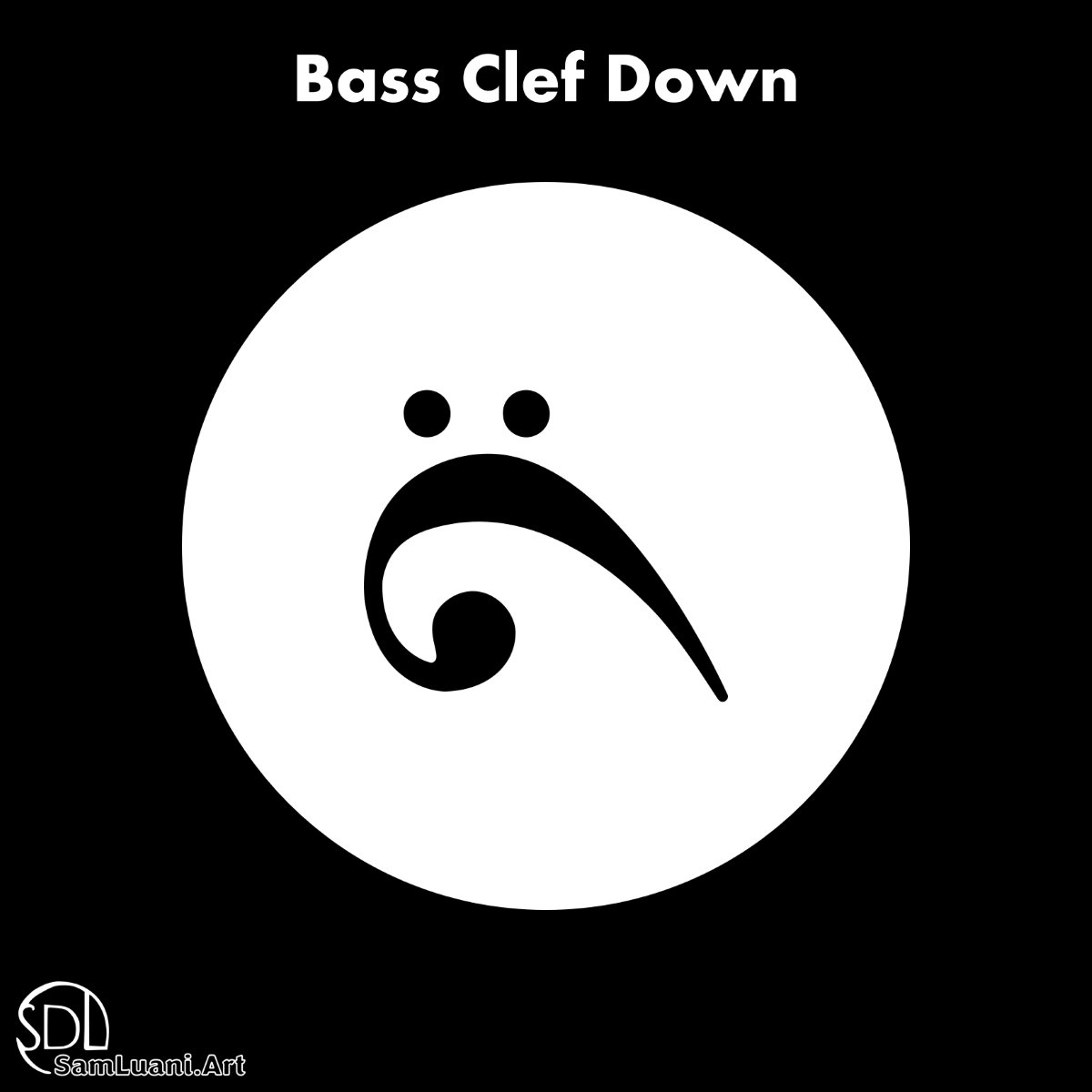
Technically, this image was drawn using the Sign of the Nightingale (the Bass Clef rotated 135 degrees) as a reference composition.
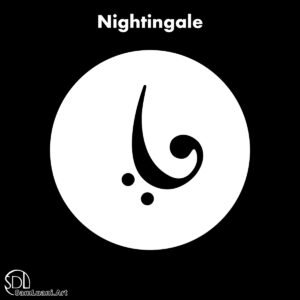
But I did not use it as a passive skeleton to drape with feathers. I used it as a law.
In InnerSpace the composition frame is a metaphor for a rhyme scheme. Consider poetry: when we speak normally, our words are “realistic” but shapeless. But when a poet forces speech to fit a meter or a rhyme, the language must be compressed, twisted, and inverted. It loses “realism,” yes—but it gains music.
This image is a pastiche of poetry. I have highly compressed and twisted the “flesh” of the bird to fit the strict, limited “meter” of the Bass Clef. The result is an inter-mediatic allegory: just as the deformation of speech creates a poem, the deformation of the bird creates an Icon.
The Multiface Portrait | The Seamless Tadpole
Because the image was forged under such high conceptual pressure, it has become a “super-dense” object. It is a multiface portrait—a seamless complex tadpole where multiple beings coexist in the same lines.
- The Singer (Left to Right): The figure starts with a split beak, celestial eyes (Sun and Moon), and continues with a sweeping wing structure. There are two birds in the image; one emerging from another. In the mythopoetry of the Old Land the nightingale does not just produce sound; it produces spirit. It summons souls.
- The Traveler (Right to Left): If you reverse your gaze, the comma-head of the bass clef becomes the head of an alien tadpole with a massive triangular ruby eye. This represents the nightingale’s trans-dimensional nature. It is believed that the bird cuts the membranes between worlds with its beak. When it is here, it looks like a bird; when it visits the Other Side, it wears this alien shape.
- The Phantom (The Interplay): Finally, a face emerges in the tension between the negative space and the figures—where the Moon constitutes one eye, the Ruby the other, and the wing structure forms a mouth.
The Rhapsodian Artifact
In the erased history of the Old Land, the nightingale was the secret patron of the Rhapsodes. These wandering singers were the poorest of all creatures, living on the scraps of the world, yet they were the only ones entrusted with the “Secrets of the Nightingale.”
They did not just sing songs; they wielded the Sign of the Nightingale tattooed on their throats. They carried modular blades shaped exactly like this image—artifacts used in rituals to cut the silence and open the doors to the spirit world.
When the nightingale sings in the bushes, unseen, it is not hiding. It is transmitting. It is singing to us through an opening it has cut in the air. This image is my tribute to that opening. It is a reminder that the “common” task of the artist is to take the heavy, raw material of life and twist it, rhyme it, and polish it until it becomes a blade sharp enough to cut through to the divine.